Most marathon fuelling advice is written for temperate climates. It assumes you sweat moderately, that your stomach behaves, and that you can comfortably absorb a set number of carbohydrates per hour.
Singapore breaks several of those assumptions at once. Here's a practical guide to fuelling a long race in genuine heat and humidity — with real numbers, and an honest account of what's still individual.
Why heat changes the maths
Two things happen when you run hard in 30°C and 80% relative humidity.
You lose more fluid and sodium. Sweat rates rise sharply, and because the air is already saturated with moisture, that sweat evaporates poorly — so you keep sweating without getting the cooling benefit. Losses of well over a litre an hour are common for a well-trained runner in local conditions.
Your gut gets less blood. Your body prioritises sending blood to the skin for cooling and to the working muscles. The digestive system is what loses out. This is why a gel that goes down fine on a cool morning run can sit like a stone at 32km on a humid race day.
The practical consequence: in the heat you need more fluid and electrolyte, and you need your carbohydrate in a form your compromised gut can still handle.
Carbohydrate: how much, and when
The general guidance for endurance events lasting longer than about 2.5 hours is roughly 60–90g of carbohydrate per hour. The upper end of that range is only achievable if you use a mix of carbohydrate types and — importantly — if you have trained your gut to tolerate it.
For most runners in Singapore conditions, starting at the lower end (around 60g/hour) and building up in training is the sensible approach.
Here's what that looks like in practice with our products:
| Product | Carbohydrate | Notes |
|---|---|---|
| Running Energy Gel | 26g per 40g sachet | Plus 60mg caffeine |
| Running Energy Gel Free | 26g per 40g sachet | No caffeine, 600mg taurine |
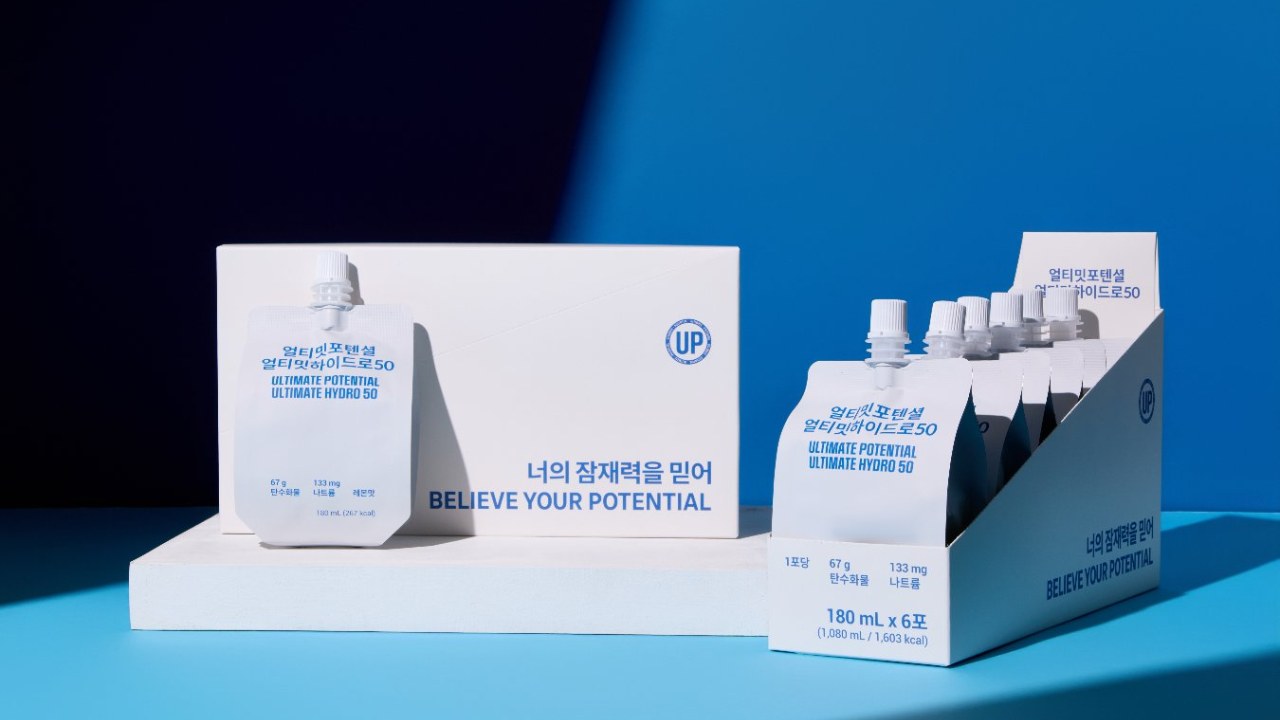
| Ultimate Hydro 50 | 67g per 180ml pouch | Plus four electrolytes |
So roughly two gels an hour, or one gel plus part of a hydration pouch, gets you into that 60g/hour zone.
A simple race-day timing template:
- 15 minutes before the start: one gel
- Every 40–60 minutes during: one gel
- Alongside: fluid with electrolytes, taken consistently rather than in large gulps
Why glucose and fructose together
This is the piece of physiology that actually matters for the upper end of that carbohydrate range.
Your gut absorbs glucose through one transport mechanism, and that mechanism saturates at around 60g per hour. Fructose uses a different transporter. By combining both, you use two absorption pathways rather than one, and total carbohydrate uptake goes up.
That's the reasoning behind the glucose-plus-fructose blend in Hydro 50 — it isn't a formulation gimmick, it's how you get past a genuine physiological ceiling.
Jeukendrup and colleagues' work on multiple transportable carbohydrates is the basis for this approach, and it's now standard practice across endurance sports nutrition.
Sodium and the humidity problem
Sodium is the electrolyte lost in the greatest quantity in sweat, and it's the one that matters most for maintaining fluid balance and avoiding the cramping and dizziness that show up late in hot races.
Plain water alone, taken in large volumes over several hours of heavy sweating, dilutes what sodium you have left. Pairing fluid with electrolytes also improves how quickly the fluid is absorbed rather than sitting in your stomach.
Each Hydro 50 pouch contains sodium 133mg, potassium 129mg, magnesium 54mg and calcium 11mg alongside its 67g of carbohydrate — the reasoning being that in this climate you rarely need fuel without also needing electrolytes.
Caffeine: useful, but decide in advance
Caffeine has one of the better evidence bases in endurance nutrition for reducing perceived effort. Our standard gel carries 60mg per sachet — roughly a strong espresso's worth.
Two practical cautions for hot-weather racing:
- Don't stack it accidentally. Four caffeinated gels over a marathon is 240mg on top of your pre-race coffee. If you're caffeine-sensitive, that's a recipe for a racing heart rate in conditions that are already elevating it.
- Evening races and late training. Singapore's running calendar is full of evening starts. This is exactly why we make the caffeine-free version — same 26g carbohydrate, no stimulant, so you can still sleep afterwards.
The rule that matters more than any of this
Nothing new on race day.
Every number above is a starting point to be tested in training, not a prescription. Gut tolerance to carbohydrate is trainable and highly individual — some runners handle 90g/hour comfortably, others are genuinely unhappy above 50g.
Practise your race fuelling on your long runs, in the same conditions and at the same time of day as your race. The runner who has rehearsed a modest, well-tolerated plan will beat the runner executing an ambitious plan for the first time.
Frequently asked questions
How many carbohydrates per hour do I need for a marathon?
For events longer than about 2.5 hours, roughly 60–90g per hour is the general guidance. Start at the lower end and build tolerance in training, as the upper end requires both a glucose-fructose blend and a gut trained to handle it.
How often should I take an energy gel?
A common approach is one gel about 15 minutes before the start, then one every 40–60 minutes during the race, taken with fluid. Adjust to what you have practised in training.
Do I need electrolytes, or is water enough for a Singapore race?
In sustained heat and humidity, sodium losses are high enough that water alone can leave you both under-fuelled and diluted. Pairing fluid with electrolytes also speeds up how quickly that fluid is actually absorbed.
Is caffeine in energy gels a good idea in hot weather?
Caffeine can reduce perceived effort, but it's easy to accumulate a large dose over a marathon. If you're sensitive, or racing in the evening, a caffeine-free gel with the same carbohydrate content is the safer option.
Why do gels feel harder to swallow late in a hot race?
Blood flow is diverted away from the digestive system towards the skin and muscles for cooling. Digestion slows as a result, which is why gel texture and taking fuel with adequate fluid matter more in the heat.
Our range is Informed Sport certified and available on the shop page, with delivery across Singapore.