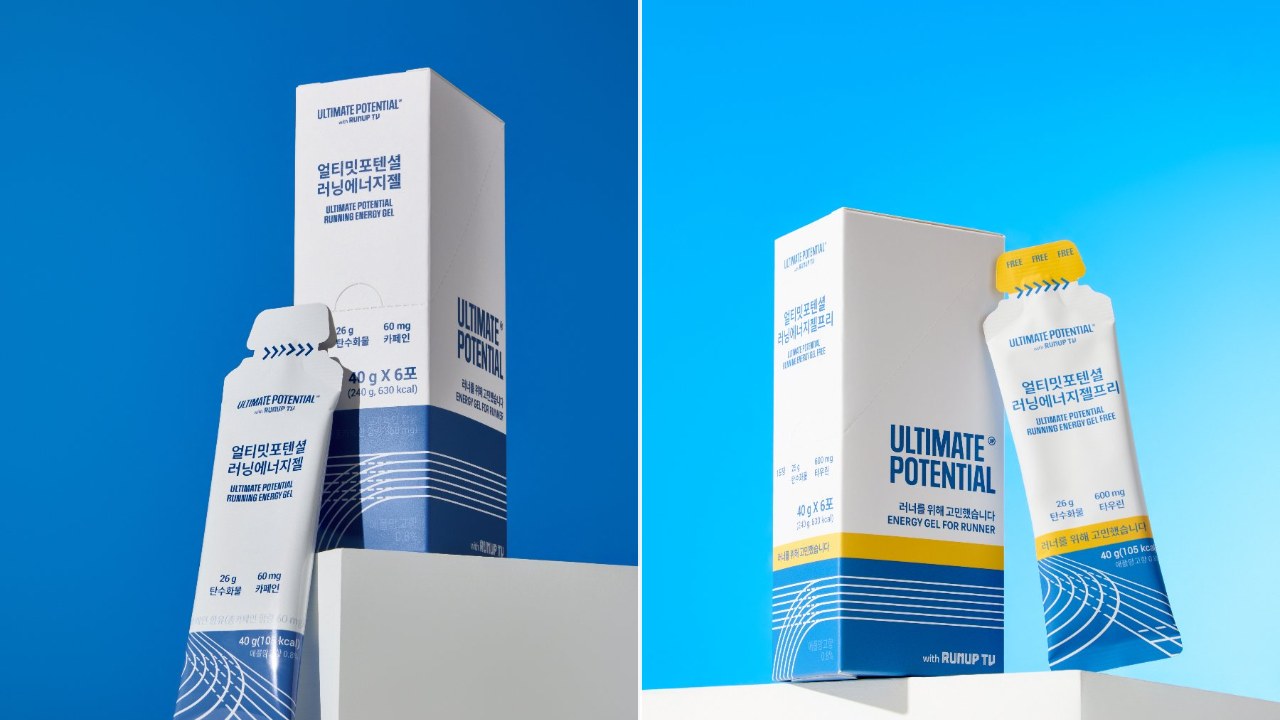
It is the question we get more than any other: should I take the caffeinated gel or the caffeine-free one?
Most brands answer this badly, because the honest answer is not "caffeine is better." It is "it depends on when you are running, how much caffeine you have already had, and how you personally respond." Here is a straight guide.
What caffeine actually does for endurance
Caffeine has one of the strongest evidence bases of anything in sports nutrition. The main effect is not that it gives you energy — it contains no calories. It works on your perception of effort.
At a given pace, caffeine makes the effort feel easier. Over a long race, feeling like you are working at 7/10 instead of 8/10 changes how long you can hold that pace. That is the whole mechanism, and it is well established.
What it does not do is fuel you. The carbohydrate does that. A caffeinated gel is carbohydrate plus a perceived-effort effect — not a substitute for eating.
The dose question, and why it matters more than you think
Our Running Energy Gel contains 60mg of caffeine per 40g sachet — roughly a single espresso.
The commonly cited performance range in the research is around 3–6mg per kg of body weight. For a 65kg runner that is roughly 195–390mg. So a single gel is a modest dose, deliberately.
Here is the part runners get wrong: it stacks.
- Pre-race coffee: 80–150mg
- Four caffeinated gels over a marathon: 240mg
- Total: 320–390mg
That is the top of the research range, taken by someone whose heart rate is already elevated by heat and race nerves. If you are at all caffeine-sensitive, that is the recipe for a racing pulse, a churning stomach and a very unpleasant final 10km.
This is exactly why we make both versions. It lets you take the caffeinated gel when it counts and switch to caffeine-free for the rest, instead of choosing once for the whole race.
Four situations where caffeine-free is the better call
1. Evening runs and races. Singapore's running calendar is full of evening starts, and caffeine has a half-life of roughly five hours — meaning half of it is still in you five hours later. A 7pm race with two caffeinated gels can genuinely cost you a night of sleep, and sleep is where the training adaptation happens.
2. You already had coffee. If you have had a pre-race flat white, your first gel does not need to add more.
3. Your stomach turns on stimulant gels. Caffeine can increase gut motility. In heat, when blood flow to your digestive system is already reduced, some runners find caffeinated gels are the thing that tips them over.
4. It is your second or third gel of the session. Take the caffeine when you need the lift — usually the back half — and keep the earlier ones clean.
What is in the caffeine-free version instead
Our Running Energy Gel Free has the same 26g of fast-absorbing carbohydrate as the original. The only real difference is the stimulant.
In place of caffeine it carries 600mg of taurine, an amino acid widely used in endurance formulations.
We want to be straight about this: the evidence for taurine is not as strong as it is for caffeine. Caffeine's ergogenic effect is one of the best-supported findings in the field; taurine's is more limited and less consistent. If somebody tells you taurine is a drop-in replacement for caffeine, they are overselling.
What you are actually buying in the caffeine-free version is the same fuel without the stimulant — which, for the four situations above, is precisely the point.
The simple decision guide
| Situation | Take |
|---|---|
| Morning race, no coffee yet | Caffeine |
| Morning race, already had coffee | Caffeine-free first, caffeine later |
| Evening race or session | Caffeine-free |
| Second or third gel in one session | Caffeine-free |
| Back half of a hard race, need a lift | Caffeine |
| You know you are caffeine-sensitive | Caffeine-free |
| Long easy run / training | Caffeine-free |
Yes, you can mix them
This is the approach we would actually recommend for a marathon: run most of the race on caffeine-free, and take the caffeinated gel at the point where the effort starts to bite — typically somewhere between 25 and 32km.
You get the perceived-effort benefit exactly where it matters, without four espressos' worth of stimulant accumulating in a body that is already under heat stress.
Both versions are Informed Sport certified, so whichever you pick, the batch has been independently tested for banned substances.
Frequently asked questions
How much caffeine is in an Ultimate Potential energy gel?
60mg per 40g sachet — roughly a single espresso. The caffeine-free version contains none, with the same 26g of carbohydrate and 600mg of taurine instead.
Is a caffeinated gel always better for performance?
No. Caffeine reliably reduces perceived effort, but the benefit depends on your sensitivity, how much you have already consumed, and the time of day. For evening runs, for second and third gels, and for caffeine-sensitive runners, the caffeine-free version is the better choice.
Can I take caffeinated and caffeine-free gels in the same race?
Yes, and for a marathon we would recommend it. Use caffeine-free for most of the race and take the caffeinated gel in the back half when the effort starts to bite.
Will an energy gel with caffeine keep me awake after an evening run?
It can. Caffeine has a half-life of about five hours, so a 7pm session with caffeinated gels leaves a meaningful amount in your system at bedtime. Use the caffeine-free version for evening running.
Does the caffeine-free gel have less energy?
No. Both contain the same 26g of fast-absorbing carbohydrate per 40g sachet. Caffeine contains no calories and does not fuel you — it changes how hard the effort feels.
Not sure how many you need for your race? Read how many gels a 10K, half and full marathon actually take, or see both versions on the shop page.